Another set of contexts of note is the norms of modern comic strips. The most general stereotype is the three aligned square panels in a strip, with more being added, particularly a second row for many longer comics, or some panels being widened. This said, the comic at hand doesn't neatly fit such a form, although the outer boundaries are still aligned. The comic has a much more vertical flow with a large blank panel in the center. The last three frames taken by themselves would constitute a more normally expected comic strip.
Secondly, the difference between comics and pure text being the drawings (or less so pictures), this comic also breaks the norms of art to text balance. Most comics have full panel art and little text. This comic bre
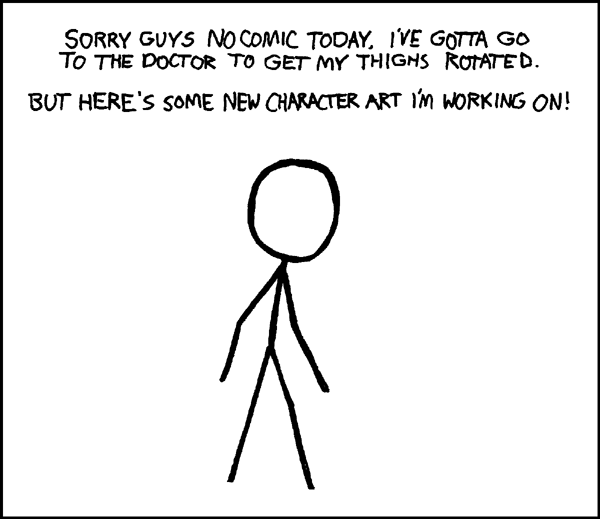 aks from that pattern by first limiting the drawn to the very minimum of telling the story at hand while, especially in the third panel as it becomes the focus, it contains much more text than would be expected in a comic, very condensed. The art of the comic is limited to the stick figures and the basic desk/computer that the second is initially sitting at, a slight difference in the "hair" used to indicate who is speaking in the latter frames. After the first two frames, when the computer is no longer necessary to the story, it is removed, giving additional focus to whats left, the simple figure and especially the text that he is "saying" (the first person is even removed after the first two frames when he no longer has anything to say). The last three panels again return to more of the norm, containing little text, although the content still breaks the expected of comics.

No comments:
Post a Comment