Tuesday, February 9, 2010

Weekly Blog Post 7

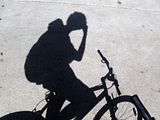
I'm not particularly interested in photography as an art form. Just as I tend to effectively be a passive learner, I am also often a passive observer in the sense that I watch the whole whilst thinking of else. In my honors creativity seminar we undertook a small photo-documenting project, given a place and required to take a certain number of pictures for several categories, like flora, building, or even sounds (take for instance my picture of my shadow while riding a bike). I left the project with relatively the same view of photography I took into it, that when it comes to visuals, I don't like to linger much longer than the short time in which I absorb the information. Although I may pause to examine an interesting detail or just admire the whole, I prefer to keep moving along, whether it be from a zoo to an art gallery. In the same way that I don't think or remember in narratives, neither do I do so in terms of pictures. Although I'm a very visual thinker, I'm also very conceptual in that thinking.

Although I don't know the "technicals" of photography as an art form, I do know how to handle a camera and digital images. The camera end of photography is hardly a problem with today's modern, digital cameras. We also worked digitally with our photos (for my creativity seminar), managing contrast and other levels to improve the picture quality. Finally, even an average amount of computer experience is more than enough to manage and store the photos after they've been taken.

Wednesday, February 3, 2010

Weekly Blog Post 6

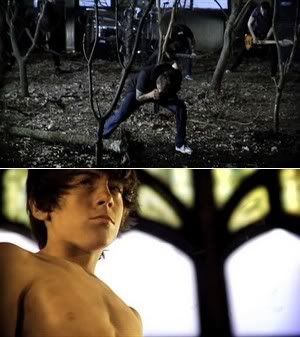
For the most part, the video for "Hey John, what's your name again?" doesn't collage, overlay, or add digital effects (with the exception of some visual static to accompany the audio static/distortion). However, even in a straight video shot, especially one involving a scene purposefully created, choices like the number of elements and their hierarchy can still be analyzed for purpose, intention, and effect.

The high number of elements throughout the video (excepting the few focus shots), like the many dead trees and falling leaves, make it more difficult to focus on any single spot. This is coupled with the short clips and moving cameras to create a visual density with far to little time for analyzing. Besides possibly a tactic by the video's creators to hide the quality of the footage, it also creates a de-emphasis on the small details of the video, forcing the audience to focus on the story generally.

The number of elements also leads to the creation of a visual hierarchy. Unlike static images, video can use the changes (over time) in aspects such as the quantity of elements to aid its establishment of hierarchies. When the video does a close-up focus, as it does of the boy's face just before the shot and the dead bird on the ground, having fewer extraneous elements (and longer and steadier camera shots) aids the focus of the shot thus creating a hierarchy of not only those subjects but those scene from amongst the rest as well. The hierarchy of the boy is also initially established by the use of contrast and sameness. Whereas the rest of the video is shown in greys and muted blues, the boy's yellow-cast shirtless torso stands out easily, even from the background which has experienced a similar although less pronounced shift in color.

A visual ethos typical to most music videos of at least professional quality is established through aspects like the many, many moving camera angles (which indicates either the time or number of cameras put into the video, as well as the knowledge to attain and then stitch those different shots together smoothly). The two portions of digital distortion and added static further this establishment of ethos by showing further desire and wherewithal for the additional technical manipulation of the video.

The video's creators also implemented to greatly emphasize the feelings and emotions portrayed by the video. One of the most direct sources of pathos, seeing the feelings of other people, is used to effect in setting the contrast of the boy's initial uncontemplative determination to his later regret. The use of color furthers this contrast, shifting from an orange (emphasizing action) to a muted blue palate, relating to the sense of sorry.

Monday, February 1, 2010

Weekly Blog Post 5

The main use of logos employed in the song is the use of symbolism and analogy. At the beginning of the song it says, "Well it must be difficult/Being so Gorgeous/Claiming to be the kings and queens." Obviously not literally meaning kings and queens (or those claiming to be), the song addresses the vanity of those who think themselves and claim to be beautiful and powerful, later saying "But its all/For nothing". They then also, although not directly, ask you to compare and contrast those people with others and more importantly yourself by sarcastically saying "Well it must be difficult". Later, symbolism is once again used to label this group saying that they'll hope and pray for "you/Amongst the reckless and the black", noting there careless sort of nature and alluding to living an impure or at least immoral lifestyle.

Although the narrative is only told generally at best by the lyrics, the music video does paint a more continuous story following the meanings of the song. At the beginning of the video the boy is self-assured, not appearing to think deeply of his actions. He then "recklessly" kills a bird (presumably out of his "megalomania" - obsession with wealth and power). After the discord at the death of the bird, they "congratulate" the boy for his "mutilation of a life". Appearing to now think and regret his actions, the boy drops the slingshot and begins to frown as the light turns from orange to blue. Next, the boy picks up the bird (the amount of blood greatly emphasized) and although finding himself "so terribly weak" (unable to undo his actions), gives it as an offering, to which final end the bird flies away. The story of the boy is meant to engage us as we learn how the choices of another shapes their life. The narrative is also used to invoke additional pathos to the lyrics, especially, for instance, in the images of the small bird. As we naturally relate ourselves to the story at hand, we experience and thus understand the feelings and emotions meant to be portrayed.

Wednesday, January 27, 2010

Weekly Blog Post 4


Beyond the several meta-contexts of a music video on YouTube linked to a blog post, etc, this video assumes and relies on a couple contexts to tells its story. I'll also ignore the contexts of the audience's and the communicator's time as well the contexts of bodies in space, all being at the choosing all parties.

First, just looking at the background, the scene is dark and gray, dead trees create tension with what appears to be at least some walls of a church (which don't appear to be in poor condition). Churches, which hold strong place and institutional contexts, are usually clean and well kept (including their grounds), contrary to the images from the video; furthermore they're not usually considers as places for metalcore performances.

The next contextual reference comes in the lyrics, starting off with "the concept of fashion is the one to blame". The first half of the song talks to ("megalomania") obsession with fashion and power ("claiming to be kings and queens"), saying "but it's all for nothing." To understand this you need to understand the context of modern pop culture (as most people that would view this video will). This, beyond an institutional context, is more of a societal context that is understood (although not necessarily valued) by a much broader audience.

Another context from the lyrics returns to religion, The Devil Wears Prada being a christian band and providing vindication for the scenery of the church. In the story of the song, even after sinning (killing the bird), "salvation lies within,' and the singer will hope and pray for 'you' (this juxtaposition manifesting itself in the aforementioned tension of the dark scene with the walls of the church). The song ends with "Here's an offering", the boy holding up the dead bird which then hops and flies away. The context of religion provides the understanding of the sin, praying, and subsequent redemption, but more importantly, depending on the audience's personal experiences with and views of religion, this context will hold significant sway in the video's appeal, strengthening it for some and turning some others away.

Monday, January 25, 2010

Weekly Blog Post 3

The class links are up and working.